 Michael Epps Utley
{kind=image/jpg}
A comparison page gets cited by AI search engines like Perplexity, Gemini, ChatGPT, and Google’s AI Overviews when it answers the exact question a buyer asks, covers every factor that could influence their decisions, and puts the verdict and table above the fold. When a buyer asks an AI engine whether one service, product, or plan is worth it over another, a clear, well-supported comparison table makes the differences easy to understand and gives AI systems clean material to extract.
An effective comparison page captures high-intent prospects who are actively evaluating their shortlists; they’re not looking for a sales pitch in disguise. It distills complex features into clear, scannable information: what’s different, why it’s important, and which option fits the buyer’s priorities. This applies to any company whose buyers are weighing software, programs, or services.
When creating a comparison page, be sure to do the following:
Build the page around the questions buyers ask: “A vs. B,” “Best X for Y,” and “Is A worth it over B?”
Compare the factors that could change a buyer’s decision, explain the trade-offs, and acknowledge where the alternative wins.
Lead with a direct answer, place a concise TL;DR and the comparison table near the top, use question-form headings, and close with an FAQ addressing related buyer questions.
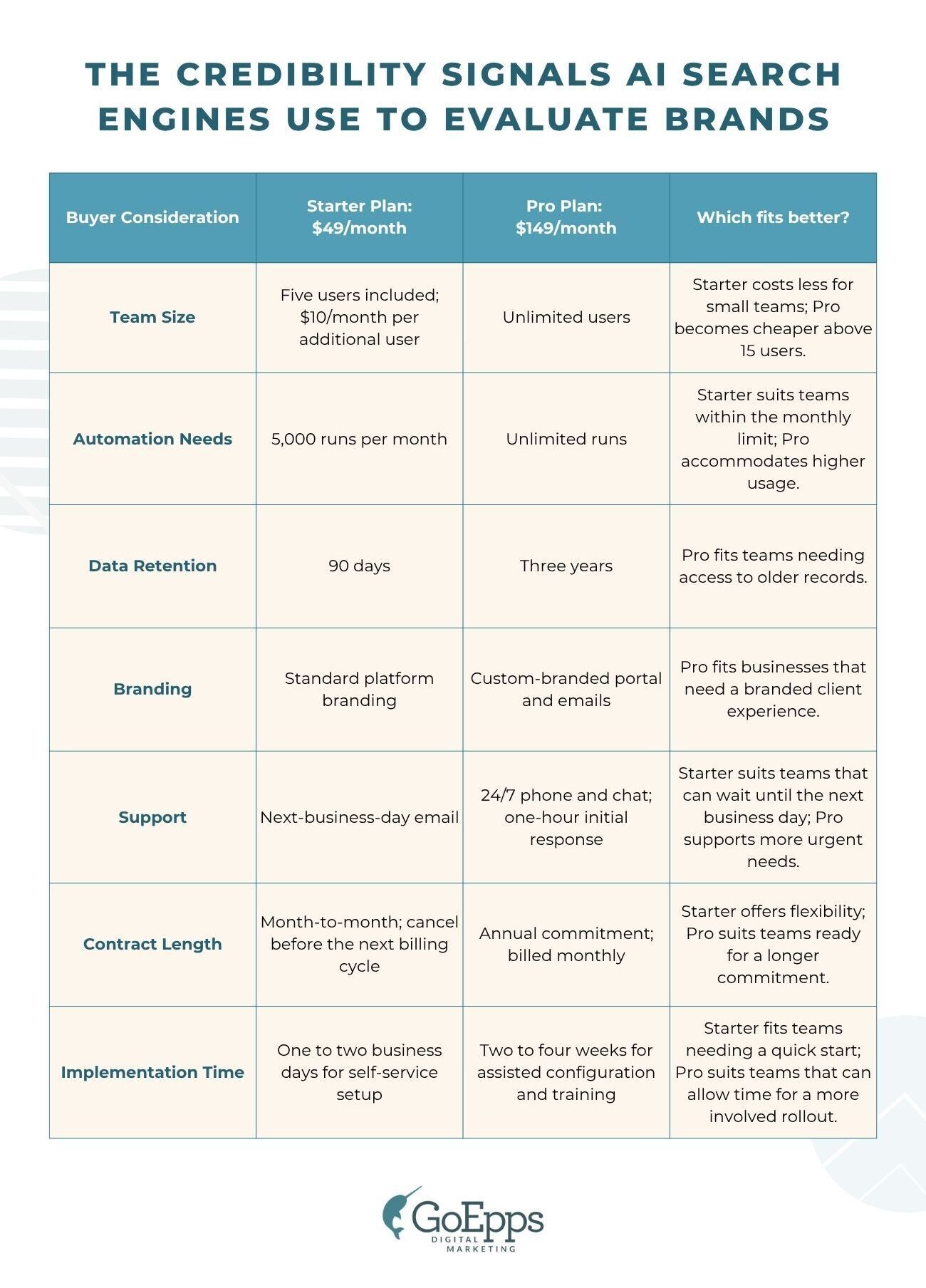
Here’s how two fictional software plans could compare for a B2B sales team.
Which Comparison Questions Are Buyers Asking?
Most comparison content is written from the inside out: here are our features, here is why they matter. Buyers ask from the outside in. They type “Starter vs. Pro,” “best digital reporting tool for B2B sales teams,” or “is the premium tier worth it?” These questions should guide your page’s title, headings, and opening lines. They should also guide what you compare.
How Complete Does the Comparison Need to Be?
Every company is biased when creating content; it’s natural. That’s why a comparison earns trust by explaining trade-offs transparently. Begin by covering every attribute a prospective buyer weighs, including the awkward ones like price, contract length, support, implementation time, and who each option suits. A table with gaps signals to audiences and AI scrapers that you're withholding something.
Write a concise verdict per attribute and acknowledge where the alternative wins. This is the part most companies resist, but it gives buyers a reason to trust the comparisons and AI more reason to cite your table. Something like “Starter costs less for small teams; Pro becomes cheaper above 15 users” explains a meaningful difference and reads like a source. “Best-in-class” reads like generic ad copy.
Link to current documentation supporting price, features, and terms, and identify the plans being compared. If a detail isn’t publicly available or hasn’t been verified, say so rather than leaving it out.
How Should You Structure a Comparison Page for AI Search?
A 2026 analysis found that 44.2% of 18,012 verified ChatGPT citations came from the first 30% of the source text. To improve your chances of being cited, give buyers the answer they’re looking for right off the top. Open with a short summary explaining which options suit whom, your TL;DR, and the comparison table. Name the products, plans, or services clearly so individual passages make sense on their own when pulled out of context, and publish the table as readable text rather than an image.
How Can You Tell Your Comparison Page Is Working?
Track whether AI systems cite the page accurately, whether your company appears in relevant recommendations, and whether the content helps generate qualified leads. Traffic alone doesn’t tell the full story. Thales’ 2026 Bad Bot Report found that bots accounted for 53% of the web traffic it observed in 2025. Google Analytics automatically excludes known bots and spiders. Either way, don’t confuse page visits with buyer intent.
Here’s what to do:
Test the same buyer questions regularly. Run a consistent set of comparison and use-case questions across relevant AI platforms. Record the date, platform, cited URLs, and whether your company is recommended, then check that pricing, features, contract terms, and trade-offs are represented correctly. Investigate errors and clarify ambiguous copy.
Connect visibility to business results. Monitor identifiable AI referrals, demo requests, qualified leads, and sales opportunities. Ask prospects how they found you. Changes in branded searches or direct traffic can offer context but don’t prove AI influence.
Comparison Page FAQs
Can a comparison page help a small B2B company appear in AI answers?
Yes. A specific, well-structured comparison page can significantly help a small B2B company appear in ChatGPT, Claude, Perplexity, Gemini, and Google’s AI Overviews.
How often should you update a comparison page?
Review it monthly and update it whenever pricing, features, or terms change. Show the date on the page so audiences and engines can see that it’s current.
Should the comparison table be gated for lead capture?
No. A gated table can’t be read or cited. Keep it open and gate a deeper asset, such as a fit assessment, further down the page.
Help Buyers Make a More Informed Choice
As companies learn more about generative engine optimization (GEO) and how to structure content for AI search, comparison tables have become one of the most effective tactics. But like all things in marketing, comparison tables need a clear, strategic purpose.
A useful comparison page gives buyers a clear view of their options. It also gives AI search systems specific, well-supported information to reference. AEO by GoEpps helps businesses assess their visibility in AI search and identify opportunities for improvement. Book a free strategy call to find out more.